Choosing the right intelligent stage lighting for events is essential for creating the perfect atmosphere. Studies show that effective lighting impacts audience engagement by 70%. It shapes moods and highlights key moments. In a world where first impressions count, lighting is often the unsung hero or the fatal flaw of an event.
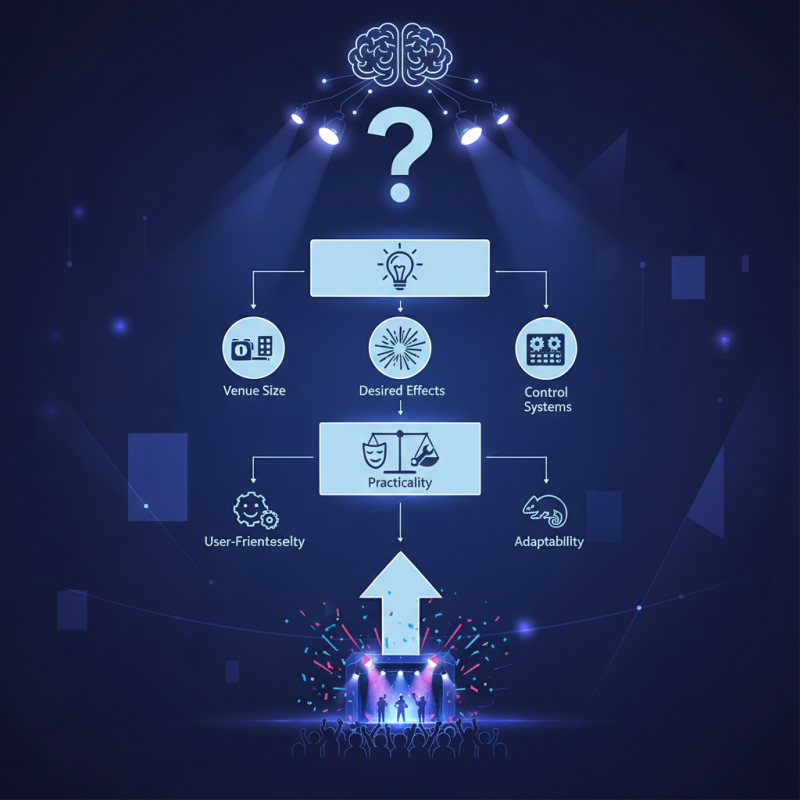
The global stage lighting market is projected to reach $6 billion by 2025. This growth indicates the increasing importance of intelligent lighting in event production. However, many planners overlook the technical specifications necessary for success. It's crucial to assess the venue size, desired effects, and control systems available. The wrong choice can lead to poorly lit performances or overwhelming visuals.
Understanding how to choose the right intelligent stage lighting for events involves more than aesthetics. It requires a balance between creativity and practicality. Consideration of user-friendliness and adaptability is vital. A failure to fully research options could result in a lackluster event. Thus, investing time in understanding lighting can make all the difference.
Intelligent stage lighting has revolutionized event production. Understanding its technology is vital. This lighting uses sophisticated mechanisms to create dynamic effects. It can adjust automatically based on the music or visual cues. According to a recent industry report, nearly 75% of event planners now prioritize intelligent lighting. It’s a game changer for concerts and corporate events.
These systems often use moving head fixtures and LED technology. Moving heads can pan, tilt, and zoom, providing endless creative possibilities. Reports suggest that energy-efficient LEDs can reduce power consumption by up to 80%. This not only saves money but is also better for the environment. However, integration can be challenging. Sometimes, communication issues between devices arise, causing delays or failures.
User experience can vary significantly. Some find it intuitive, while others face a steep learning curve. It’s crucial to train your team adequately. Many users overlook this aspect, leading to inefficient setups. Investing in training can mitigate these pain points and maximize the impact of intelligent lighting. By recognizing these challenges, event planners can make more informed decisions.
When choosing lighting for an event, it’s crucial to identify specific needs. Consider the atmosphere you wish to create.
Bright, vibrant colors may suit a lively party. A soft, warm glow can enhance a corporate meeting’s professionalism.
Think about the venue too. Is it large or small? Outdoor or indoor? Each setting has different requirements.
Your objectives matter. Do you want to spotlight a performer or create a moving light show? Perhaps you aim for subtle elegance. Challenge yourself to visualize how lighting affects mood.
Explore various effects and colors. Picture how each option can impact your guests. Asking for feedback is helpful but can feel daunting.
Reflect on what truly resonates with your event's theme.
Sometimes, the right solution isn't clear. Experimentation may lead to unexpected results.
Embrace the creative process. You might discover unique combinations that surprise you. Lighting isn’t just about visibility; it’s about enhancing experiences.
Take risks and re-evaluate your choices continually. That journey often leads to the best outcomes.
Choosing the right intelligent stage lighting can significantly enhance your event. There are various types of fixtures available, each with unique features. Moving head lights, for example, dominate many shows. They can pan, tilt, and change colors, offering dynamic effects. However, they may require extra setup time and skilled operation.
Another popular choice is LED wash lights. They provide broad coverage and vibrant colors. These lights are energy-efficient, making them ideal for long events. Yet, users must be cautious of a potential lack of sharpness in light beams. This can affect the overall ambiance if not positioned properly.
Lastly, consider the importance of control systems. A well-designed control interface can greatly enhance the usability of your lighting setup. However, complex controls can be overwhelming. It’s essential to find a balance between functionality and ease of use. Each type of lighting fixture presents its own set of challenges, prompting reflection on your specific event needs.
Selecting intelligent stage lighting involves careful evaluation of key features. Brightness, color accuracy, and flexibility are pivotal. A report from the Entertainment Services and Technology Association states that 75% of event planners prioritize brightness level in choosing lighting for large venues. This means that a lumens measurement of at least 1,200 is often recommended for substantial impact.
Color accuracy is another essential feature. Lighting that can reproduce colors faithfully enhances the overall atmosphere. According to the Illuminating Engineering Society, a Color Rendering Index (CRI) of 90 or above is ideal for creating stunning visuals. Additionally, flexibility allows adaptability to different event types. Some fixtures may include adjustable beams and dynamic effects, enabling distinct experiences.
Yet, the choice can be overwhelming. Many models come with complex features that might not be necessary for all events. Event organizers often feel the pressure to utilize advanced technology, even if simpler options could suffice. Evaluating the most relevant specifications requires hindsight and real-world application. Overlooking essential aspects like power consumption may lead to increased operational costs. Balancing innovation with practicality is crucial for making informed decisions.
| Feature | Description | Importance Rating (1-5) |
|---|---|---|
| Brightness (Lumens) | The measure of light output. Higher lumens indicate brighter lights suitable for large venues. | 5 |
| Color Temperature (Kelvin) | Determines the warmth or coolness of the light. Key to setting the mood. | 4 |
| Compatibility with DMX | Allows for synchronized control of multiple lighting fixtures. | 5 |
| Beam Angle | The width of the light beam, affecting coverage area. | 4 |
| Weight | Important for portability and mounting options, especially for mobile events. | 3 |
| Power Consumption (Watts) | Lower consumption can save costs and reduce heat generation. | 5 |
| Lifespan (Hours) | Indicates how long the fixture will last before needing replacement. | 4 |
When budgeting for stage lighting, clarity is key. Start by determining your total event budget.
Allocate a percentage for lighting based on the event size. Consider whether you need rental equipment or a purchase.
Rentals usually offer flexibility, while purchases might save long-term costs. Keep in mind that unforeseen expenses can arise.
Always set aside a buffer.
Sourcing reliable suppliers is equally important. Research potential vendors thoroughly.
Look for testimonials or reviews from previous clients. Reach out to local companies; they often have lower shipping costs and quicker service.
Don't hesitate to ask for quotes from multiple suppliers to find competitive pricing. Ensure you communicate your needs clearly.
Build a rapport with your supplier; it can lead to better deals in the future.
It's worth noting that not every supplier will meet your expectations. Some may delay shipments or provide subpar equipment.
Reflect on past experiences and learn from them. Keep an open mind to adjust your supplier list as needed.
Balancing quality and cost will ultimately enhance your event experience.
: Intelligent stage lighting uses advanced technology to create dynamic visual effects at events.
It can automatically change based on music or visual cues, enhancing the audience's experience.
Moving head fixtures and energy-efficient LED technology are commonly utilized in modern lighting setups.
LEDs can save up to 80% in power consumption, reducing costs and environmental impact.
Communication issues between devices can lead to delays or failures, requiring careful setup and testing.
Adequate training is crucial; without it, setups may be inefficient, and mistakes can occur frequently.
Determine your total budget and allocate a percentage for lighting while allowing for unforeseen expenses.
Research vendors, check reviews, and get multiple quotes to ensure competitive pricing and quality.
Reflect on the experience, learn from it, and be open to adjusting your supplier list as needed.
Good relationships can lead to better deals and more reliable service for future events.
Choosing the right intelligent stage lighting for events requires a solid understanding of the technology and its applications. First, it's essential to grasp the basics of intelligent stage lighting, including the different types of fixtures available. Assessing your event's specific lighting needs and objectives will guide your decision-making process, ensuring that the chosen lighting enhances the overall experience.
When comparing various intelligent stage lighting fixtures, it’s crucial to evaluate key features such as brightness, color capabilities, and control options for optimal performance. Budgeting appropriately and sourcing reliable suppliers will also contribute to the success of your event's lighting setup. By following these guidelines, you can confidently determine how to choose the right intelligent stage lighting for events, ensuring a memorable visual experience for your audience.
Senning Lights