Top 10 LED Light Curtains Factory & Exporter

Decentralized Smart Lighting Systems, Architectural Illuminations, and High-Performance Project Solutions Engineered for Global Enterprises

The Strategic Evolution of Global LED Curtain & Stage Lighting Procurement

Insight into commercial sourcing, system architectures, and manufacturing quality metrics.

In modern commercial architecture and dynamic event spaces, LED light curtains and display elements have evolved from basic festive backdrops to highly integrated, digitally controllable, and energy-efficient building system components. As modern architectural aesthetics shift toward interactive facades, and large-scale entertainment productions demand higher luminous outputs with lower power footprints, global B2B buyers must navigate complex technical specifications when selecting manufacturing partners.
Selecting a top-tier LED Light Curtain Factory and Exporter requires evaluating core competencies beyond simple unit pricing. Professional procurement specialists assess a factory's engineering design capabilities, raw component supply lines, circuit architecture, thermal management design, and compliance with certifications like UL, CE, RoHS, and FCC. Choosing the right partner determines the long-term reliability and operational stability of installations in environments ranging from cruise ship stages to high-rise building facades.

Pixel-Mapping Flexibility

Advanced driver topologies enabling seamless pixel mapping via Art-Net, sACN, and DMX512, ensuring complex animations display across massive scales without frame delay.

Thermal Performance

Engineered structures utilizing high-conductivity aluminum PCBs and heat-dissipating potting compounds to prevent lumen degradation and color shift.

High Ingress Protection

IP65, IP67, and IP68 rated sealing systems to withstand extreme weather, UV degradation, salt-fog corrosion, and seasonal temperature cycling.

Structural Supply Chain Advantages of China's LED Manufacturing Clusters

Why Guangzhou and Shenzhen remain the global hub for advanced architectural and event lighting production

China’s dominance in the global LED light curtain and professional stage lighting sector is built on specialized industrial clusters, primarily located in Guangdong province (Guangzhou, Shenzhen, and Zhongshan). These regions house a complete vertical supply chain, encompassing raw semiconductor wafer dicing, chip packaging, precision PCB fabrication, automated SMD (Surface Mount Device) placement, plastic injection molding, and CNC metal machining. This geographic concentration allows factories to rapidly prototype, optimize, and scale production compared to fragmented regional supply lines.
Direct R&D Scaling: EV LIGHT Industrial Infrastructure

Guangzhou Senning Lighting Equipment Co., Ltd. (EV LIGHT) operates a dedicated high-tech industrial park covering 26,000 square meters. By integrating specialized R&D laboratories, an advanced electronics shop, and assembling facilities under one roof, we streamline quality control protocols. Over 90% of our production supports custom OEM and ODM requirements, catering to strict technical specifications for international markets, particularly the United States and Western Europe.

In addition to engineering flexibility, Chinese manufacturers benefit from advanced automation. High-speed placement machines, wave soldering lines, and automated optical inspection (AOI) systems minimize human assembly error. For B2B clients, this ensures consistent color rendering (CRI/TLCI), color temperature uniformity (SDCM < 3), and voltage drop compensation across long lighting runs.
26,000㎡
Production Complex
90%+
OEM & ODM Ratio
98.6%
First-pass QC Yield
48 Hrs
System Burn-in Test

Global Application Scenarios & Macro Solutions

Analyzing how integrated LED curtain and spot illumination solve design challenges across diverse projects

Architectural Facades & Media Walls

Transforming glass skyscrapers and corporate headquarters into dynamic media walls. High-transparency LED curtains preserve natural indoor lighting while delivering high-contrast daytime and nighttime graphic displays.

Key Requirement: IP67 Weatherproofing & Wind-load Resistance

Performance Stages & Theaters

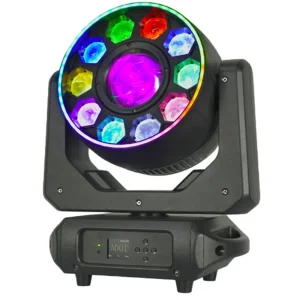
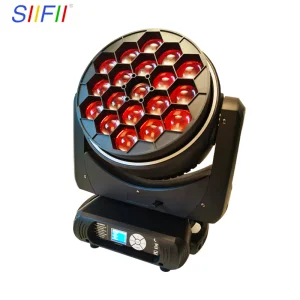
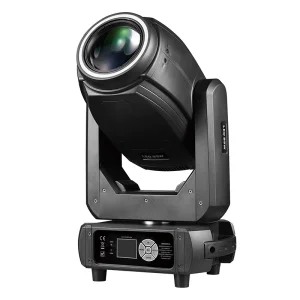
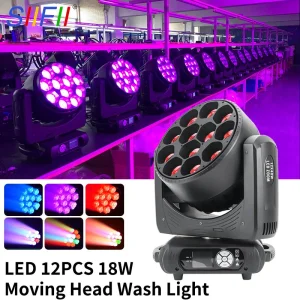
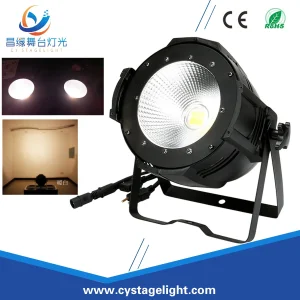
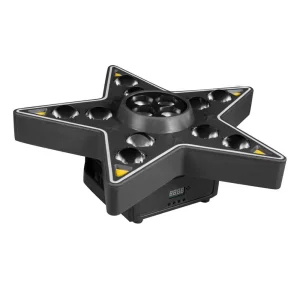
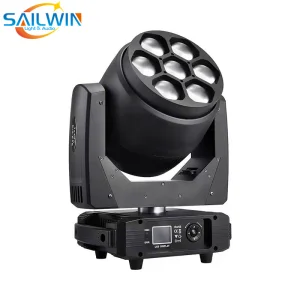
Providing stage backdrops and lighting with spot, beam, and wash capabilities. Integrating LED curtains with moving head systems (like the Bee Eye or Gobo spots) provides deep color saturation and dynamic dimension.

Key Requirement: RDM / DMX512 Integration & Ultra-Quiet Fans

High-Traffic Commercial & Retail

Engaging retail shoppers with dynamic lighting in shopping malls, event halls, and hotel lobbies. These systems sync with seasonal themes via scheduling software, lowering operation and maintenance costs.

Key Requirement: Low Heat Emission & Simplified Control Systems

Macro System Integration: Smart City Lighting

Modern smart cities use centralized protocols to coordinate architectural lighting. By connecting public facade lighting, street fixtures, and dynamic LED curtains to a central server, municipalities can manage energy consumption in real time, apply regional lighting themes, and schedule dimming patterns to reduce light pollution.

Technological Breakthroughs Shaping Modern LED Systems

Innovations driving next-generation luminous efficacy, control intelligence, and environmental durability

The LED industry is shifting toward higher-efficiency light engines, smart driver boards, and modular form factors. Key technical advancements driving the market include:
01

Smart IoT Drivers

Wireless control protocols (such as BLE Mesh, Wi-Fi, and ZigBee) integrated directly into driver ICs, enabling mobile management and configuration.

02

Cob / Mini-LED Tech

Chip-on-Board configurations providing high pixel density and uniform light distribution, virtually eliminating glare and pixelation.

03

High Energy Efficacy

Reaching up to 160 lm/W. Advanced designs use less power to generate equivalent lux levels, lowering overall project operating costs.

04

Modular Architecture

Interlocking frames with quick-lock magnetic latches reduce labor costs during installation, teardown, and maintenance.

B2B Procurement Playbook: Vetting LED Curtains & Stage Lighting Exporters

Essential validation checkpoints for engineering firms, lighting consultants, and importers

To minimize project delay and product failures, B2B procurement professionals evaluate structural, electrical, and commercial indicators during vendor qualification:

1. Compliance Certification

Ensure products carry UL (US), CE (Europe), CSA (Canada), or SAA (Australia) marks. Request test reports directly from third-party testing organizations like TÜV, SGS, or Intertek.

2. Silicon & Wiring Grades

Verify wires use pure copper conductors to prevent voltage drop over long series. Specify UV-stabilized silicone or polyurethane casing to prevent cracking outdoors.

3. Driver & Power Margins

Power supplies should run at a maximum of 80% of rated capacity. Opt for premium drivers (such as Mean Well or Inventronics) to protect components from voltage spikes.

Featured Project Implementations

Case studies showcasing our architectural and event stage illumination installations
Global LED Lighting Installation Project 02
Stadium & Commercial Plaza Illumination
Global LED Lighting Installation Project 01
Large Scale Outdoor Concert & Event Stage
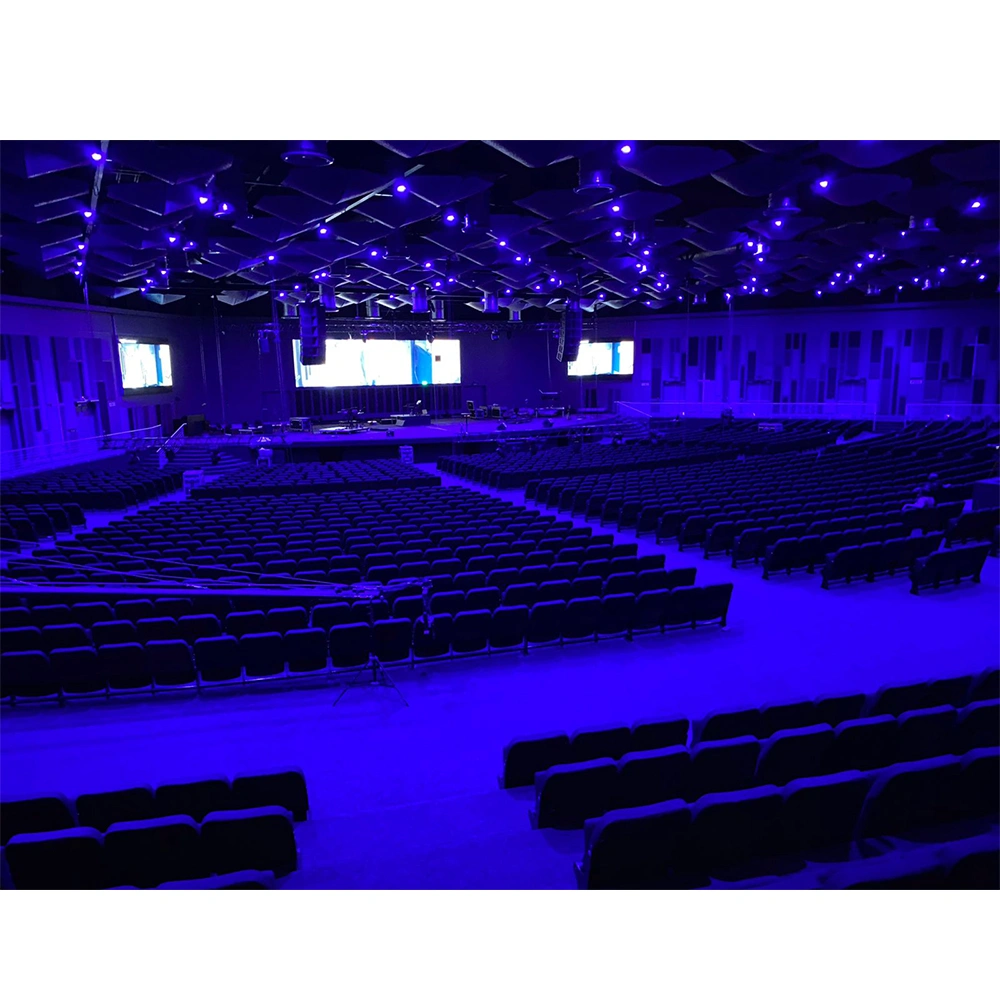
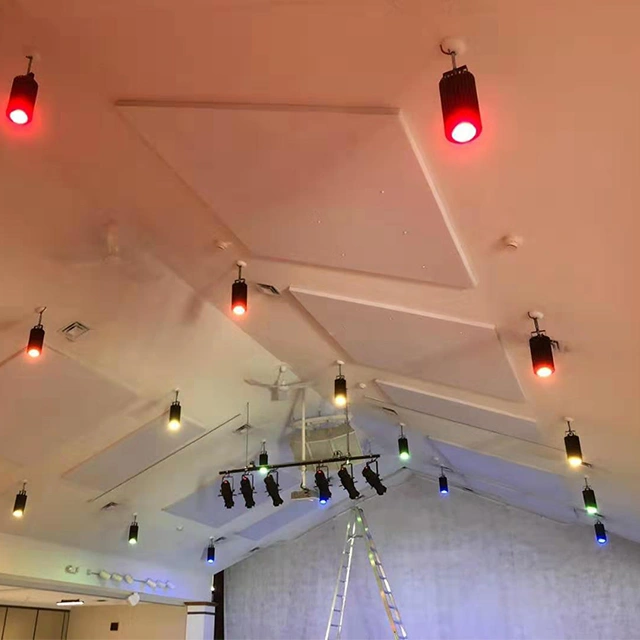
Church Pendant & Stage Light Integration
Worship Venue & Church Lighting Setup

Technical & Procurement FAQ

Answers to technical, logistics, and quality assurance questions for B2B buyers

Q1: How do you prevent voltage drop and dimming on long LED light curtain runs?
Voltage drop is mitigated by design. We use thicker, pure copper PCB traces (2oz or 3oz copper thickness) and pure copper core cabling. Additionally, for runs exceeding 10 meters, we recommend dual-ended power injection or constant current driver designs to ensure consistent brightness from the first node to the last.
Q2: What is the typical lead time for custom OEM/ODM production batches?
For standard products, our lead time ranges from 15 to 21 days. For complex OEM/ODM projects requiring tooling, PCB layout adjustments, or customized aluminum housing extrusions, prototyping takes 14 to 20 days, and mass production is completed within 30 to 45 days from engineering sign-off.
Q3: How do EV LIGHT products ensure reliable operation in outdoor marine or high-humidity environments?
Outdoor models feature custom potting made of high-grade silicone or polyurethane compounds, protecting components from humidity, acid rain, and salt spray. Our cables use IP67/IP68 rated waterproof connections, and housings are treated with anti-corrosive powder coatings.
Q4: Do your stage fixtures support standard digital control interfaces?
Yes, our professional lighting systems support DMX512 and RDM protocols as standard. Select high-density pixel-mapping bars and moving head lights also support Art-Net and sACN protocols, allowing integration with major industry software and lighting consoles.
Q5: How does EV LIGHT manage quality assurance during assembly?
We implement a multi-stage QA process, including incoming component testing, automated optical inspection after SMD placement, IP chamber testing for outdoor series, and a 48-hour burn-in period under thermal stress before packing.